My hometown team, the Tampa Bay Rays, and the Milwaukee Brewers are playing for a World Series title. Neither team has won it before. This year, that changes for one of them.
You know I’m rooting for my Rays.
But watching these teams has me thinking about coaching, the work behind the results, and what a leader does when their team is falling behind.
Now, making it to the World Series is hardly low performance. But the connection brought me back to a team I coached that had a very different starting point.
We were in fourth place.
Out of four teams.
When I say last place, I mean dead last.
Mission accepted
When I first became a Coach in the Quality department at T-Mobile, I was assigned the lowest-performing team.
My first thought? Of course I would get this team.
Don’t get me wrong. These were capable specialists. But as a new leader, I saw the assignment as a challenge. I knew leadership wasn’t going to be easy, and I was ready to step up.
Mission accepted.
It’s been a while, but I remember calls per hour, or CPH, and audits being two of the big measures we were ranked on.
I knew where we stood. What I needed to understand was what we could do about it.
And I wasn’t going to figure that out by myself.
“I don’t know” was where we started
I brought the team together and asked why they thought we were in last place.
There was a lot of “I don’t know” and “We’re not really sure.”
We didn’t leave that first question with some brilliant discovery. They didn’t have a neat explanation ready for me.
So I asked another question.
“Where do you think we need to start?”
Their answer was CPH.
Then came the next question: “How do we do that?”
That gave us something specific to work on together.
Notice the “we.”
I’ve always told my teams that we win as a team, and we can lose as a team. But saying “we” means I have work to do, too. I’m responsible for coaching, asking questions, and helping us follow through.
Giving them the floor didn’t remove my responsibility. It helped me understand where to begin.
A plan we could practice every day
We worked on a plan to help everyone meet their calls-per-hour expectations each day.
If someone fell behind, we checked in. What could we do to help them meet the expectation the next day?
And when they did? We hyped them up.
We had a clear expectation, a reason to check in, and a chance to recognize progress. It became something we worked on day by day.
CPH wasn’t the only measure that mattered. Audits were part of the picture, too. But the team had identified a place to start, and we could take action on it.
That’s something I still carry with me. “We need to do better” is hard to act on. Choosing something specific gives people a clearer next step.
And because the team helped build the plan, they were participating in fixing what wasn’t working.
Yes, there were carrot cake cupcakes
One thing I loved about leadership at T-Mobile was being called a Coach. I took that title to heart.
I had my own version of locker room talks.
After a good day, I wanted the team to feel that win. When the day wasn’t so good, the conversation was about what we could do better tomorrow.
I also looked for ways to bring some fun into our work.
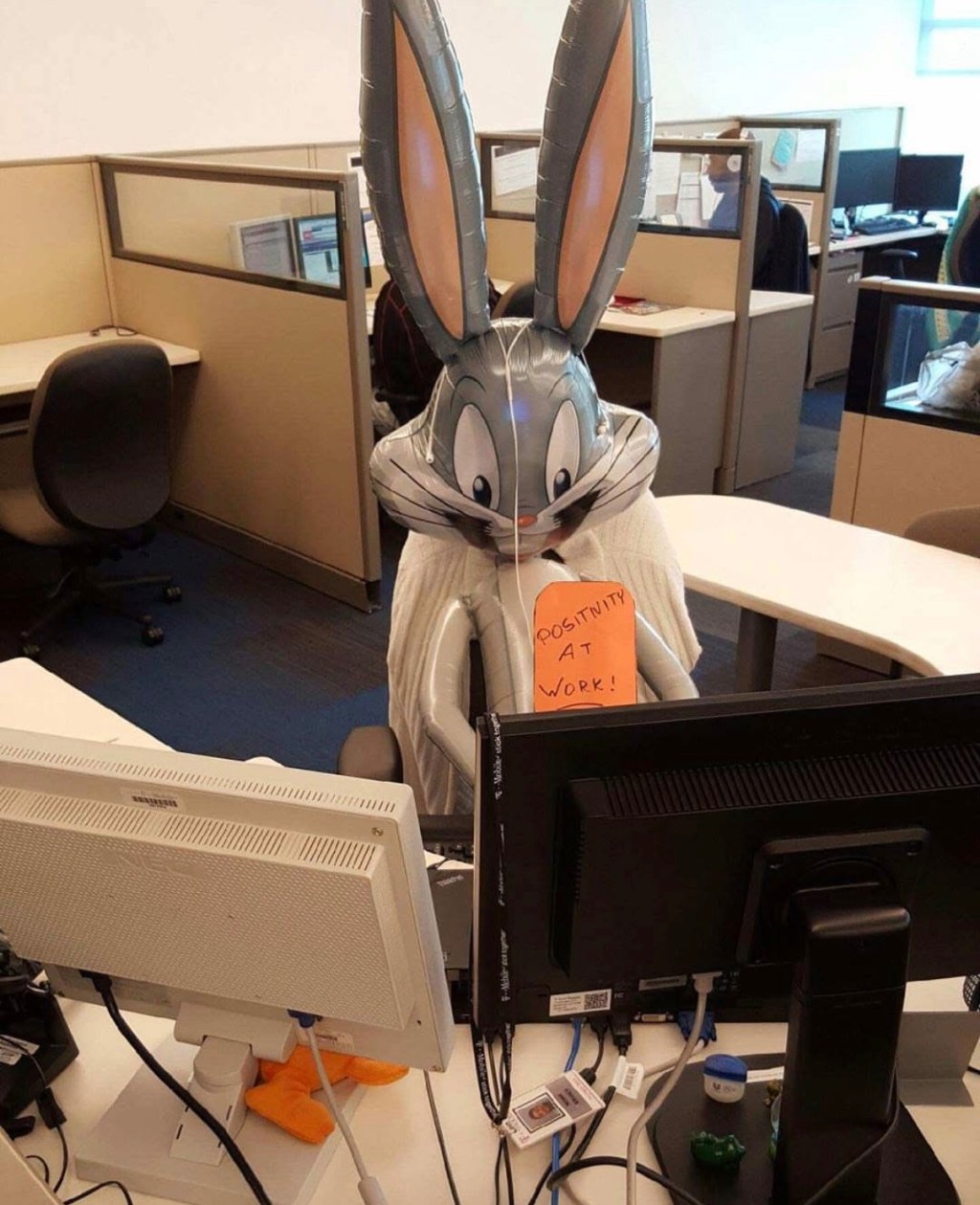
Our managers had decided that each team would be named after a cartoon character. We were Team Bugs.
Did you know April 30 is National Bugs Bunny Day?
Well, I found out, and I had plans.
Carrot cake cupcakes. Carrots with ranch cups. A giant Bugs Bunny balloon. I decorated our pod.
Listen, I was committed.
And they loved it.
The cupcakes weren’t our performance plan. The check-ins and daily work still had to happen. But celebrating together was one way I showed the team that I cared about our experience at work, too.
We could take our results seriously and still enjoy being Team Bugs.
Six months of showing up
It took us about six months to get to first place.
And we stayed there.
That felt good. But what mattered to me was that it hadn’t been a Geo effort. The team had helped decide where to start, worked toward the expectations, and supported each other along the way.
They had done the work.
First place also wasn’t the first moment worth celebrating. Every time someone caught up, met their expectation, or helped a teammate, we had something to build on.
If we had waited until we topped the rankings to recognize progress, we would have missed a lot.
What a coach can do
Looking back, one of the most useful things I did was keep asking questions when the first answer was “I don’t know.”
I didn’t need to pretend the ranking was okay. We had expectations to meet. But the ranking alone didn’t explain what was happening or tell us how to improve.
The team needed a voice in that conversation. I needed to listen and help turn the conversation into action.
That’s the connection I see with coaching in sports. Coaches have responsibilities, and so do players. Encouragement matters, but so does preparation, practice, and looking honestly at what needs work.
One World Series team will take home the trophy. The other will have disappointment to work through and decisions to make about what comes next.
At work, we have to make those decisions, too. How do we respond to a difficult result? What do we ask? What support do we offer? And do we recognize progress while there’s still work left to do?
When your team is falling behind, what’s the first conversation you have?
I’m glad I asked Team Bugs where they thought we should start. Their answer gave us something we could work on together.
And if your team happens to be named after a cartoon rabbit, I can recommend carrot cake cupcakes.
But hey, you do you.


Leave a Reply